
Lime - #RideGreen
Neutron Holdings, Inc.Travel & Local
4.929.04K Reviews
- Version
- 3.289.0
- Installs
- 10.00M
- Age Rating
- Everyone
Screenshots
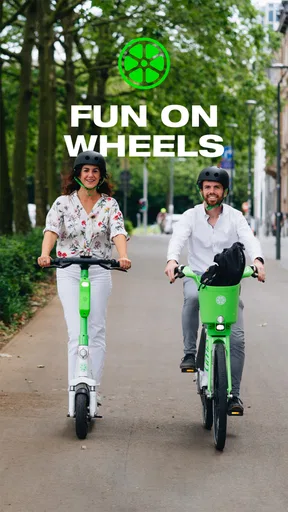
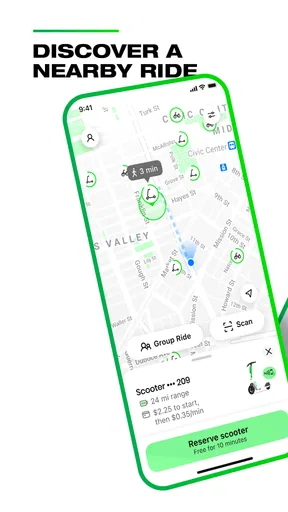
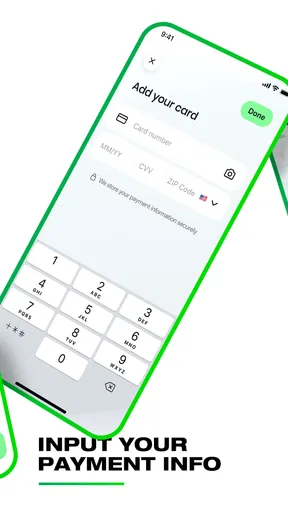
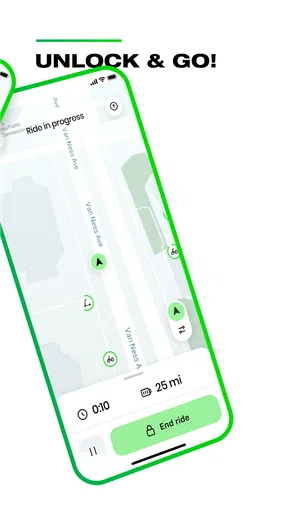
Our Review of Lime - #RideGreen
 Analysis by Appyee
I first approached Lime as a practical way to cover short urban journeys, not as a replacement for every trip I make. That distinction matters. The app belongs to the Travel & Local category and connects the phone experience with shared electric vehicles, so its usefulness depends heavily on where you live, how comfortable you are riding in traffic, and whether vehicles are usually available when you need them.
My first impression was that the service makes spontaneous travel feel approachable. Instead of planning around a bus timetable or committing to a taxi, I could check the map, find a nearby vehicle, unlock it, and continue on my own schedule. That freedom is the main attraction during the first week. It turns a walk that feels too long into a manageable ride, while avoiding the parking hassle that comes with driving.
Still, the novelty wears off quickly. After several rides, the important question becomes whether Lime is reliable enough to become part of a routine. In my experience, the answer is yes for certain short trips, but not as a universal transport solution. It is strongest as a flexible gap-filler between walking, public transit, and driving.
From the first ride to a lasting habit
Before I decide whether a shared ride belongs in my routine, I look beyond how quickly I can get moving. The more useful test is whether the whole journey—from finding a vehicle to reaching a comfortable stopping point—fits the way I travel. That perspective also makes it easier to judge what the app communicates clearly and where a rider still has to make their own assessment.
Why the first week feels so convenient
The early appeal comes from reducing friction. A journey that might require finding a parking space or waiting for a connection can become a direct trip from one point to another. I found this especially useful for errands in busy areas, reaching a train station, or getting home after public transport had left me with an awkward final stretch.
The map is central to the experience. It helps me decide whether using a shared vehicle makes sense before I leave, rather than discovering too late that the nearest option is inconvenient. That small planning step is important: I now check the map before walking toward a pickup area, because the closest vehicle is not always the most practical one for my destination.
A realistic everyday example is a short appointment across town. Walking would take too long, driving would add parking stress, and a bus might involve a transfer. In that situation, Lime can fit neatly into the middle. I can ride directly, leave the vehicle in an appropriate place, and continue with the rest of my day without managing a car.
The app is free to install, and its age rating is Everyone, which makes it easy for a broad audience to try. That does not mean every ride is equally suitable for every person. Comfort with traffic, local riding conditions, weather, and the rules of the area all matter more than the simple act of downloading the app.
What I learned after the novelty faded
During the first few uses, I was mainly evaluating speed and convenience. Later, I started judging the service by consistency. Is there a vehicle near the place I am leaving? Can I finish the trip where I need to go? Is the vehicle in good enough condition to use comfortably? These questions determine whether the app becomes a habit or remains an occasional backup.
That is where Lime feels different from a bus pass or a personal bicycle. A bus offers a predictable network but follows a fixed route. A personal bicycle is available whenever I maintain it, but I must store and protect it. Lime sits between those options: it offers flexibility without ownership, yet availability and vehicle condition are outside my control.
I also learned to leave a little extra time. The map can show a nearby vehicle, but reaching it, checking it, and preparing for the ride is not always instant. A vehicle may be farther away than it first appears, or the route may be less comfortable than the straight-line distance suggests. For an appointment with no margin for delay, I prefer a more predictable option.
How it compares with ordinary alternatives
For very short distances, walking remains the simplest choice. It costs nothing, requires no unlocking step, and avoids concerns about traffic or parking. I choose Lime when the distance is long enough to make walking inconvenient but short enough that a car feels excessive.
Public transit is usually better for longer journeys or routes with dedicated, reliable connections. It can also be preferable in bad weather, on roads where I do not feel comfortable riding, or when I am carrying something bulky. Lime wins when I value a direct route and flexible departure time more than a fixed network.
Ride-hailing and taxis are more suitable when I need door-to-door travel without riding myself, when I am traveling with luggage, or when I do not want to think about traffic conditions. A personal bicycle or scooter makes more sense for someone who rides frequently along familiar routes and is willing to handle charging, storage, cleaning, and repairs personally.
The useful insight is that Lime is not competing with just one alternative. It competes with the specific inconvenience of each option. It removes parking from a car trip, waiting from a transit trip, and ownership from a personal vehicle. It does not remove every inconvenience at once.
Where the recurring value comes from
Month to month, I see the most value when the app solves the same type of journey repeatedly. Commuters with a short connection between a station and an office may get more practical benefit than someone who only wants an occasional recreational ride. The same is true for people living in dense areas where short trips are common and parking is frustrating.
The developer, Neutron Holdings, Inc., has built the experience around shared electric mobility rather than a single-purpose navigation tool. That focus is useful because the app is designed around the whole trip: locating a vehicle, starting the ride, and ending it responsibly. I do not open it simply to browse a map; I open it when I am considering a particular journey.
The service has reached a broad audience, with over ten million installs and an average rating of 4.9 from around 704 thousand ratings. Those figures suggest strong general acceptance, but they should not replace personal judgment. A high rating cannot guarantee that the local supply, road layout, or parking rules in my area will suit my routine.
One practical habit improved my experience: I decide the likely destination before unlocking. This sounds obvious, but it prevents aimless riding and makes it easier to judge whether the trip is genuinely more convenient than walking or transit. I also look at the final approach, not just the starting point. A vehicle that is easy to find can still be a poor choice if the destination has limited space or uncomfortable traffic nearby.
Small routines that protect the value
I treat every ride as a short transport task rather than an impulse purchase. Before starting, I check the vehicle’s visible condition and make sure I understand where the trip should end. This takes little time and reduces the chance of discovering a problem after I have already committed to the journey.
Another useful routine is keeping the phone sufficiently ready before leaving. The app is the control point for finding and starting the vehicle, so a low battery or unreliable connection can create unnecessary stress. I would not choose a shared ride for an important appointment unless I had already allowed for that kind of practical issue.
I also avoid assuming that the shortest route is the best route. A slightly longer street with calmer traffic can make the trip feel much safer and less tiring. This is one of the most important differences between looking at a map and actually using a shared vehicle: the route needs to work for a rider, not merely for a line drawn between two locations.
The maintenance burden is lower, not absent
The strongest ownership advantage is that I do not have to store, charge, or repair a personal vehicle. That removes a meaningful burden for people in apartments, travelers, or anyone who rides only occasionally. I can use shared mobility without dedicating space at home to another transport device.
However, shared ownership changes the maintenance experience rather than eliminating it. I depend on the condition of whichever vehicle is available. A vehicle may feel less comfortable than expected, show signs of heavy use, or be positioned poorly. When that happens, I have to make a quick decision: continue, find another option, or abandon the ride.
This is where personal expectations matter. Someone who wants a perfectly adjusted vehicle every morning may prefer owning and maintaining a bicycle. Someone who values not having to think about storage and repairs may gladly accept occasional inconsistency. I fall between those positions: I appreciate the low commitment, but I do not pretend it offers the control of a personal vehicle.
Ending the ride responsibly is part of that maintenance burden too. Shared vehicles work only when users leave them in sensible places and avoid creating obstacles for other people. The final minutes of a trip therefore require attention. I cannot simply stop anywhere that happens to be convenient for me; the end point affects the next rider and the surrounding pedestrian space.
What creates fatigue over time
The first source of fatigue is uncertainty. Even when the app makes a trip look easy, the real experience depends on vehicle availability, local conditions, and the final destination. If I have to repeatedly search, walk farther than expected, or change plans, the convenience advantage starts to disappear.
The second is physical and mental effort. Riding is more active than sitting in a car or on a bus, and busy streets demand attention. That can be enjoyable for a short outing, but it is not always what I want after a long day. Weather, hills, poor road surfaces, and carrying items can turn a simple trip into an uncomfortable one.
The third is repetition. A service can be excellent for occasional gaps yet disappointing as a daily default. If my route regularly requires checking the map, adjusting the destination, and worrying about the return journey, I may eventually prefer a slower but more predictable alternative. Lime earns lasting space when it removes effort more often than it adds it.
I also think about the psychological cost of making a decision for every trip. With a personal bicycle, the choice is settled because the vehicle is already mine. With Lime, I evaluate the map and circumstances again. That flexibility is valuable, but flexibility can become decision fatigue when used several times a day.
Who will get the most from it
I would recommend Lime to people who make short urban journeys, live near a dependable supply of shared vehicles, and are comfortable riding in their local environment. It is particularly useful for filling gaps in a public-transit journey, handling quick errands, and avoiding car parking in crowded areas.
It can also suit visitors who want more independence than walking provides without arranging a car for every short trip. The app gives those users a way to consider nearby shared mobility as they move around, although they still need to judge local traffic and where the ride can end.
I would be more cautious recommending it to someone who needs guaranteed arrival times, frequently carries large bags, dislikes riding near traffic, or lives in an area where shared vehicles are sparse. People with accessibility needs should also choose the transport option that best matches their individual mobility requirements rather than assuming an electric shared vehicle will be suitable.
For families, the Everyone rating describes the app’s broad content suitability, not a promise that every vehicle or trip is appropriate for every child. Parents should make the transport decision based on local rules, supervision, and the rider’s ability to travel safely.
Version, maturity, and everyday usability
The current version is 3.279.0, and the app supports operating systems from version 9 onward. That makes it accessible to many users with older phones, while still placing the normal importance on keeping the app and device functioning properly before a ride.
The service was released on May 10, 2017, so I view it as an established mobility product rather than a short-lived experiment. Its age helps explain why the basic workflow feels familiar: the app is built around a repeated action that users can understand quickly. The challenge is no longer learning what it does; it is deciding whether local availability makes it worth returning to.
The large review base, including around 29 thousand written reviews, gives Lime a substantial public track record. I still read local experiences with caution because shared mobility can vary greatly from one city or neighborhood to another. The same app can feel effortless in one place and inconvenient in another simply because the surrounding transport environment is different.
My long-term verdict
After the first-week excitement, Lime remains useful when I give it a clear role. I do not treat it as a complete replacement for walking, transit, taxis, or a personal bicycle. I use it when a direct short ride is valuable enough to justify checking availability and accepting the responsibilities of shared transport.
Its lasting strength is the balance between access and commitment. I can avoid owning another vehicle while still gaining a faster option for selected journeys. Its lasting weakness is that the experience never becomes entirely automatic: I must keep evaluating the vehicle, the route, the destination, and my own energy.
Lime earns a place in my regular travel habits when it solves a recurring gap, not when I force it to replace every other option. If your daily trips are short, urban, and flexible, the free app is worth trying. If you need certainty, maximum comfort, or complete control over the vehicle, a personal bicycle, public transit, or a car service may serve you better.
For me, that honest middle ground is the reason it survives beyond the novelty phase. It is not magic transportation, and it does not remove every inconvenience. But used selectively, it can make ordinary city travel simpler without adding the long-term maintenance and storage demands of ownership.
Privacy and Permissions
See what permissions an app requests and how it handles your data.
- Contacts
- read your contacts
- Location
- approximate location (network-based), precise location (GPS and network-based)
- Photos/Media/Files
- read the contents of your USB storage, modify or delete the contents of your USB storage
- Storage
- read the contents of your USB storage, modify or delete the contents of your USB storage
- Camera
- take pictures and videos
- Other
- view network connections, pair with Bluetooth devices, access Bluetooth settings, full network access, control Near Field Communication, run at startup, reorder running apps, control vibration, prevent device from sleeping
Verdict
Strengths of Lime - #RideGreen
- Unlocking and payments are handled smoothly through the mobile app.
- Ride availability can be checked before walking to a pickup location.
- Electric scooters and bikes offer a convenient option for short urban trips.
- The app usually provides clear ride history and payment records.
- Lime’s presence in many cities makes the service useful for occasional travelers.
Limitations of Lime - #RideGreen
- Vehicle availability and battery levels can vary significantly by neighborhood.
- Parking rules may be confusing, especially in busy or restricted areas.
- Per-minute pricing can become expensive during longer rides or delays.
- Poor weather can make scooters and bikes uncomfortable or unsafe to use.
- Some vehicles may have worn brakes, low tires, or other maintenance issues.
Similar Picks in This Category
View All
Google Maps
Google LLC3.4

Google Maps Go
Google LLC4.1

Booking.com: Hotels & Travel
Booking.com Hotels & Vacation Rentals4.8

Google Earth
Google LLC3.8

Skyscanner Flights Hotels Cars
Skyscanner Ltd4.8

trivago: Compare hotel prices
trivago N.V.4.4
Frequently Asked Questions
What is Lime - #RideGreen and how does it work?
Lime - #RideGreen is a shared mobility app for finding and renting electric scooters and bicycles in supported cities. After creating an account, you can use the map to locate an available vehicle, scan its QR code, and begin your trip. The app shows nearby vehicles, riding zones, parking information, and trip details, although availability and features may vary by location.
How much does it cost to ride with Lime?
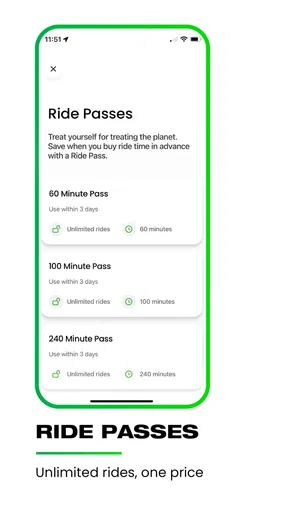
Lime’s pricing usually includes an unlocking fee followed by a time-based rate, but the exact cost depends on your city, vehicle type, local taxes, and current promotions. Before starting a ride, the app normally displays the applicable pricing information. Some locations also offer ride passes or subscriptions, so it is worth checking the payment and pass sections before confirming your trip.
Do I need a driving license or meet an age requirement to use Lime?
Requirements can differ according to local regulations, but Lime generally requires riders to meet a minimum age and accept the company’s safety and user terms. A driving license is not always required for standard electric scooters or bicycles, although some cities may impose additional rules. Check the requirements shown in the app and follow all local traffic laws before riding.
Where can I ride and park a Lime scooter or bicycle?
Lime vehicles are intended for use in approved service areas, and the in-app map indicates where rides can begin, continue, or end. Certain streets, sidewalks, parks, and restricted zones may be unavailable or subject to reduced speed limits. At the end of your trip, park responsibly in a permitted location without blocking pedestrians, entrances, ramps, or public access.
What should I do if the vehicle is damaged or the ride does not end correctly?
Inspect the scooter or bicycle before starting and report visible damage through the Lime app whenever possible. If the vehicle malfunctions during your trip, move to a safe location and use the help or support section to contact Lime. When finishing, confirm that the ride has ended in the app and take any requested parking or end-of-trip photo to avoid continued charges.
